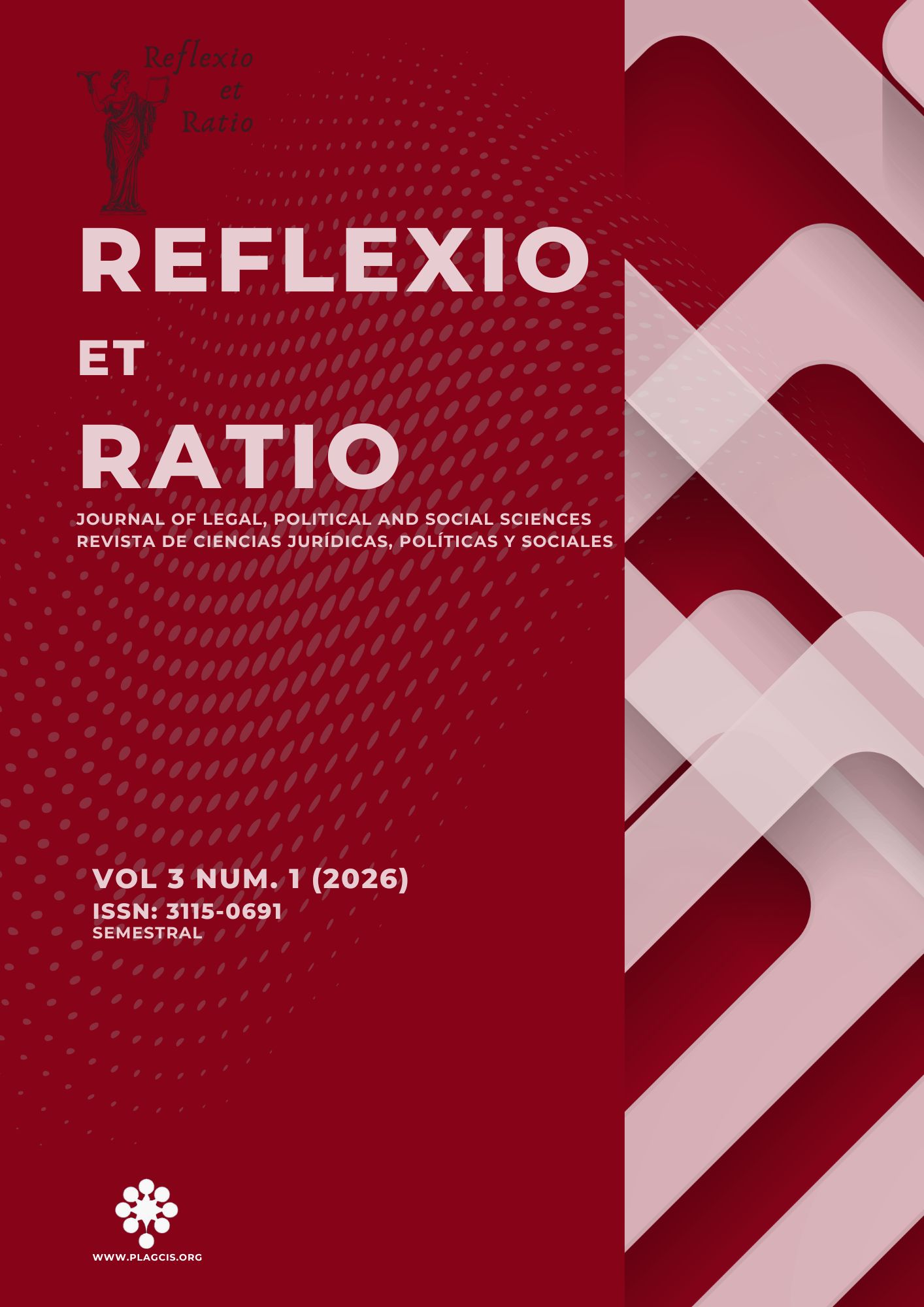
Initial teacher training: key to educational transformation in Colombia
DOI:
https://doi.org/10.69821/rer.v3i1.32Keywords:
Educational quality, Escuelas Normales Superiores, Initial teachers training Educational institutions, education policy, Teacher education systemAbstract
This article reflects on initial teacher training in Colombia (FID), with an emphasis on the Complementary Training Program of Higher Normal Schools and its impact on the quality of education in the country. Based on a review of the literature and an analysis of regulatory frameworks and recent academic studies, the article examines the categories of initial teacher training, as well as the pedagogical, mission-oriented, and regulatory nature of the PFCs that structure these programs and contribute to the quality of education in the country and the cohesion of the teacher training system. It argues that educational quality cannot be separated from the strength of initial training and that PFCs, due to their institutional and historical configuration, have significant potential to contribute to educational transformation. The article provides an integrative reading that links educational policy, curriculum, and teacher training, proposing to understand initial training as the structural foundation for the sustained improvement of the Colombian educational system.
Downloads
References
Bourdieu, P. (1984). Distinction: A social critique of the judgement of taste. Harvard University Press.
Bruns, B., & Luque, J. (2014). Great teachers: How to raise student learning in Latin America and the Caribbean. World Bank.
Calderhead, J. (1988). The contribution of field experiences to student primary teachers’ professional learning. Research in Education, 40(1), 33–49.
Colombia, Congreso de la República. (2025, 16 de julio). Ley 2481 de 2025 (por la cual se reconoce y reglamenta el papel de las Escuelas Normales Superiores en el marco de la educación superior, entre otras disposiciones).
Colombia, Ministerio de Educación Nacional. (2013). Sistema colombiano de formación de educadores y lineamientos de política. Ministerio de Educación Nacional.
Colombia, Ministerio de Educación Nacional. (2024). Formación inicial [Página web]. Ministerio de Educación Nacional.
Colombia, Ministerio de Educación Nacional. (2017, 15 de septiembre). Resolución 18583 de 2017 (por la cual se establecen características específicas de calidad para los programas de Licenciatura). Ministerio de Educación Nacional.
Colombia, Presidencia de la República. (2008, 19 de diciembre). Decreto 4790 de 2008 (por el cual se establecen las condiciones básicas de calidad del programa de formación complementaria de las Escuelas Normales Superiores).
Colombia, Presidencia de la República. (2020, 14 de septiembre). Decreto 1236 de 2020 (por el cual se regula la organización y funcionamiento de las Escuelas Normales Superiores).
Darling-Hammond, L., & Bransford, J. (Eds.). (2005). Preparing teachers for a changing world: What teachers should learn and be able to do. Jossey-Bass.
Feo, R. (2011). Una mirada estratégica a la formación docente de calidad. Revista Iberoamericana de Educación, 56(3), 1–13. https://doi.org/10.35362/rie5631517
Fullan, M. (1993). Change forces: Probing the depths of educational reform. Routledge.
Hanushek, E. A., & Rivkin, S. G. (2012). The distribution of teacher quality and implications for policy. Annual Review of Economics, 4(1), 131–157. https://doi.org/10.1146/annurev-economics-080511-111001
Martínez García, J. S. (2017). El habitus. Una revisión analítica. Revista Internacional de Sociología, 75(3), e074. https://doi.org/10.3989/ris.2017.75.3.15.115
Matos Lluberes, P. (2017). La formación de docentes en la República Dominicana: Un reto para las instituciones de educación superior. AULA, 61(1), 58–64.
Ministerio de Educación Nacional (Colombia) & Asociación Nacional de Escuelas Normales Superiores (ASONEN). (2015). Naturaleza y retos de las Escuelas Normales Superiores [Documento]. Ministerio de Educación Nacional.
Prieto Jiménez, E. (2008). El papel del profesorado en la actualidad. Su función docente y social. Foro de Educación, 6(10), 325–345.
Rivero Castro, M. del R., & Medeiros Urzúa, M. P. (2023). ¿Calidad en la formación inicial docente?: Análisis de los nuevos estándares de la profesión docente para carreras de pedagogía. Perspectiva Educacional, 62(3), 3–26. https://doi.org/10.4151/07189729-Vol.62-Iss.3-Art.1248
Sánchez Ponce, C. (2013). Estructuras de la formación inicial docente: Propuesta de un sistema clasificatorio para su análisis. Perfiles Educativos, 35(142), 128–148.
Stuart, J. S., & Tatto, M. T. (2000). Designs for initial teacher preparation programs: An international view. International Journal of Educational Research, 33(5), 493–514.
Trujillo Losada, M. F., García Sánchez, D., & Franco Romero, J. F. (2023). Formación docente y calidad de la educación. Revista Interamericana de Investigación, Educación y Pedagogía, 16(1), 99–128. https://doi.org/10.15332/25005421.7896
Downloads
Published
Issue
Section
License
Copyright (c) 2026 Hilcia Esther Acosta García, Maira Alejandra Pulgarin Rodríguez (Autor/a)

This work is licensed under a Creative Commons Attribution 4.0 International License.
a. The authors retain copyright and grant the journal the right of first publication, with the work licensed under a Creative Commons Attribution 4.0 International License, which allows third parties to use the published work provided they acknowledge the authorship and the original publication in this journal.
b. Authors may enter into separate, additional contractual agreements for the non-exclusive distribution of the version of the article published in this journal (e.g., including it in an institutional repository or publishing it in a book), provided they clearly indicate that the work was first published in this journal.
c. Authors are permitted and encouraged to share their work online (e.g., in institutional repositories or on personal websites) before and during the manuscript submission process, as this can lead to productive exchanges and increased and faster citation of the published work.